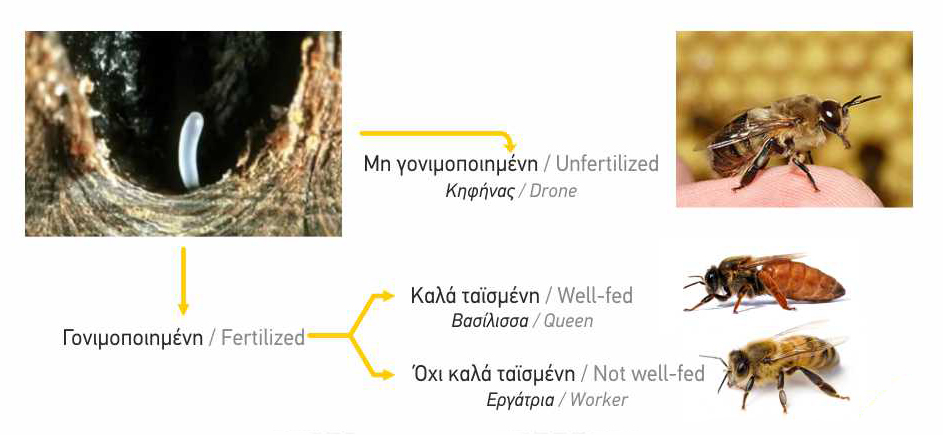
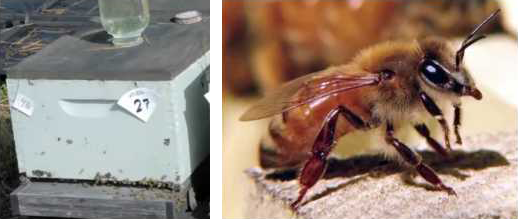
Workers do not lay eggs with a healthy queen present. If queen is failing or absent, workers can lay unfertilized eggs (drones).
Instead of reproducing, workers care for the hive, including performing most of the tasks in and outside of the nests.
Back
1. Cleaner Bees
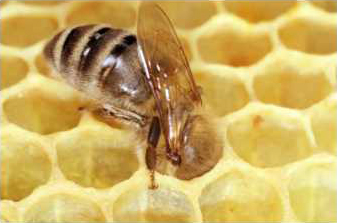
Cleaning is the first job workers do when they emerge as adults.
They primarily clean cells in the brood area.
Soon after emerging they also learn how to get food.
Back
2. Nurse Bees
Workers become nurse bees after their hypopharyngeal glands develop.
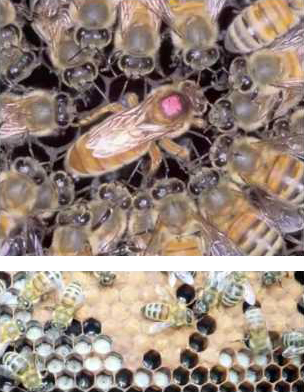
Nurse bees feed and care for the brood.
After their glands are fully developed at about 6 days after emergence, nurse bees can feed the youngest larvae royal jelly.
Back
3. Honey Producers (Nectar ripening)
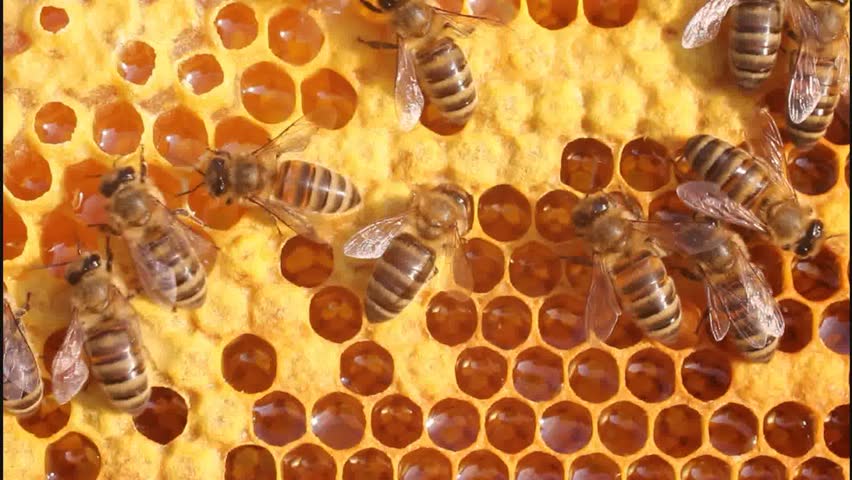
1. After being a nurse bee, a worker undertakes the job of receiving loads of nectar from foragers.
2. She then begins active evaporation, the first step in turning nectar to honey.- This involves mixing the nectar with enzymes while blowing bubbles of nectar.
3. After 20 minutes the nectar will be placed in a cell to undergo passive evaporation.
4. Fully ripened honey is consolidated into cells and capped with wax.
Back
4. Guards
Workers begin guarding the hive at 18-24 days.
Guards assess everything that tries to enter the hive.
Each hive has a distinct odor which identifies foragers as part of the hive. Intruders will not have this smell. Guards are the first line of defense against pests and robbers.